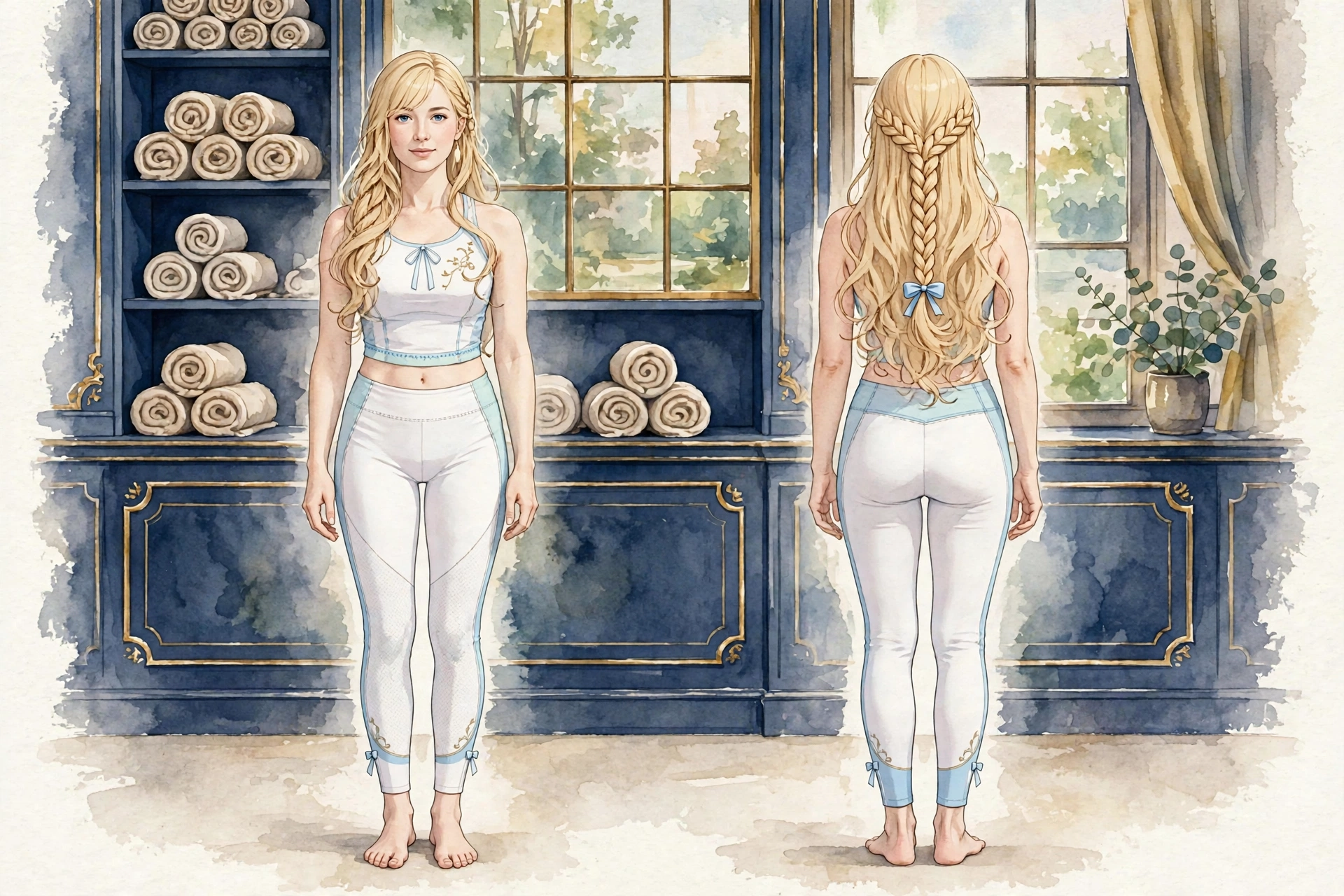
A fully private, women-only salon. Grounded in Oriental-medicine knowledge, each session combines oil massage and beauty seitai (posture care), composed for your body that day. No acupuncture is performed here — treatments are by hand only.
Our Approach — Oriental Medicine as the Foundation
Our strength is the Oriental-medicine view of the body, learned through acupuncture training. We use no needles or moxa here; instead, that way of reading the body shapes how each oil massage and beauty seitai session is built.
In Oriental medicine, your condition is understood through the flow of Ki (energy), Ketsu (blood) and Sui (water/fluids). When one of them stagnates or runs low, it tends to appear as stiffness, heaviness, coldness or swelling. At your session we first ask about your condition, concerns and daily life, and consider where the strain on your circulation may lie. Pressure depth, treatment order and focus areas are then arranged for you — we do not simply repeat the same routine every time.
気Ki — Energy & the Power to Circulate
The source of movement and warmth in the body. When Ki is low or stagnant, it is thought to show as tiredness, heaviness and low motivation. Deep breathing and unhurried pressure are used to support whole-body circulation.
血Ketsu — The Flow that Nourishes
The flow that delivers nourishment throughout the body. Stagnation is associated with stiffness, tension and coldness. With oil, we work from large muscles toward the extremities with circulation in mind.
水Sui — The Body's Fluid Balance
The fluids within the body. When they stagnate, they are felt as puffiness and heaviness. Techniques that stroke legs and arms from the extremities toward the centre support fluid balance and flow.
The idea of “Mibyo” — care before illness
Oriental medicine values caring for the body at the stage called mibyo: not ill, but not quite well either. If you feel “not unwell enough for a hospital, but the tiredness won't lift,” regular body care is a chance to turn your attention to your own condition.
✦ Our Name — Spica, the Brightest Star in Virgo
Spica is the brightest first-magnitude star in Virgo; its name means “ear of wheat” in Latin. Shining where the goddess holds her sheaf of wheat, it has long been a symbol of abundance and harvest.
Our sister salon in Umeda, Stella Polaris (the North Star), is the guiding star. Stella Spica in Sannomiya is the star of harvest — wishing fruitful rest to women whose days at work and at home have borne fruit. After your treatment, dress at ease and step into tomorrow a little lighter.
Care Guide by Concern
All 21 concerns covered by our care guide, in summary. Each has a full page — currently in Japanese — explaining the Oriental-medicine view, the recommended treatment and self-care at home. Tap a topic on the Japanese guide to read it.
Stiffness & TensionStiff ShouldersFor shoulders hardened by desk work
Stiffness & TensionStiff NeckFor necks stiffened by phones and looking down
Stiffness & TensionBack TensionTension and heaviness around the shoulder blades
Stiffness & TensionHeavy Lower BackFor backs tired by sitting or standing work
FatigueWhole-Body FatigueTiredness that rest alone doesn't lift
Circulation & ColdLeg SwellingFor legs that feel tight and puffy by evening
Circulation & ColdSensitivity to ColdFor cold hands and feet
FatigueGeneral HeavinessFor days when the body just feels heavy
Posture & BeautyRounded BackPosture care for a rounded, “cat” back
Posture & BeautyRounded ShouldersBeauty seitai care that opens the chest
Posture & BeautyPosture & PresenceThe impression of how you stand and walk
Face & HeadFacial PuffinessApproached from the neck, shoulders and décolletage
Face & HeadTired EyesNeck, shoulder and head care for screen work
Face & HeadHeavy HeadEased from the neck, shoulders and back
FatigueRefresh & ResetA whole-body oil treatment as a reward to yourself
Mind & SleepShallow SleepFor trouble falling asleep or light sleep
Mind & SleepFeeling Out of BalanceFor tension that won't switch off (autonomic balance)
Women's RhythmsAround Your PeriodFor heaviness and irritability before and after periods
Women's RhythmsMenopausal ChangesFor hot flushes and unsettled feelings
Stiffness & TensionTired Arms & HandsArms tired by desk work and housework
Circulation & ColdTired Legs & FeetSoles and calves tired by standing work
Full guide (Japanese): 症状・お悩み別ケアガイド — 21 topics
Meridian Guide — All 20 Meridians
In Oriental medicine, meridians are the pathways of the body's circulation. We introduce all 20 — the Twelve Regular Meridians and the Eight Extraordinary Vessels — in our Japanese guide. Acupuncture is not performed here; meridian thinking informs which areas we focus on and the direction of strokes in oil massage.
The Twelve Regular Meridians — the main pathways connected to the organs:
Lung Meridian肺経 — Hand Taiyin
Large Intestine Meridian大腸経 — Hand Yangming
Stomach Meridian胃経 — Foot Yangming
Spleen Meridian脾経 — Foot Taiyin
Heart Meridian心経 — Hand Shaoyin
Small Intestine Meridian小腸経 — Hand Taiyang
Bladder Meridian膀胱経 — Foot Taiyang
Kidney Meridian腎経 — Foot Shaoyin
Pericardium Meridian心包経 — Hand Jueyin
Triple Energizer Meridian三焦経 — Hand Shaoyang
Gallbladder Meridian胆経 — Foot Shaoyang
Liver Meridian肝経 — Foot Jueyin
The Eight Extraordinary Vessels — pathways that regulate the twelve meridians:
Governor Vessel督脈 — Du Mai
Conception Vessel任脈 — Ren Mai
Penetrating Vessel衝脈 — Chong Mai
Girdle Vessel帯脈 — Dai Mai
Yin Link Vessel陰維脈 — Yin Wei Mai
Yang Link Vessel陽維脈 — Yang Wei Mai
Yin Heel Vessel陰蹻脈 — Yin Qiao Mai
Yang Heel Vessel陽蹻脈 — Yang Qiao Mai
Full guide (Japanese): 経絡ガイド — all 20 meridians. Our blog columns are also in Japanese: Blog.
Combined Meridian Chart — Front, Side and Back Views
The chart below (Figs. 1–3) layers all 361 acupoints of the fourteen meridians — the twelve regular meridians plus the Governor and Conception vessels — divided across front, side and back views, each meridian colour-coded over a figure in fitted yoga wear. The numbered list under the chart gives the name of every point (point names in Japanese, following the WHO standard acupoint locations).
Acupoint List — Numbers and Names
The number and name of every acupoint shown in Figs. 1–3, by meridian.